
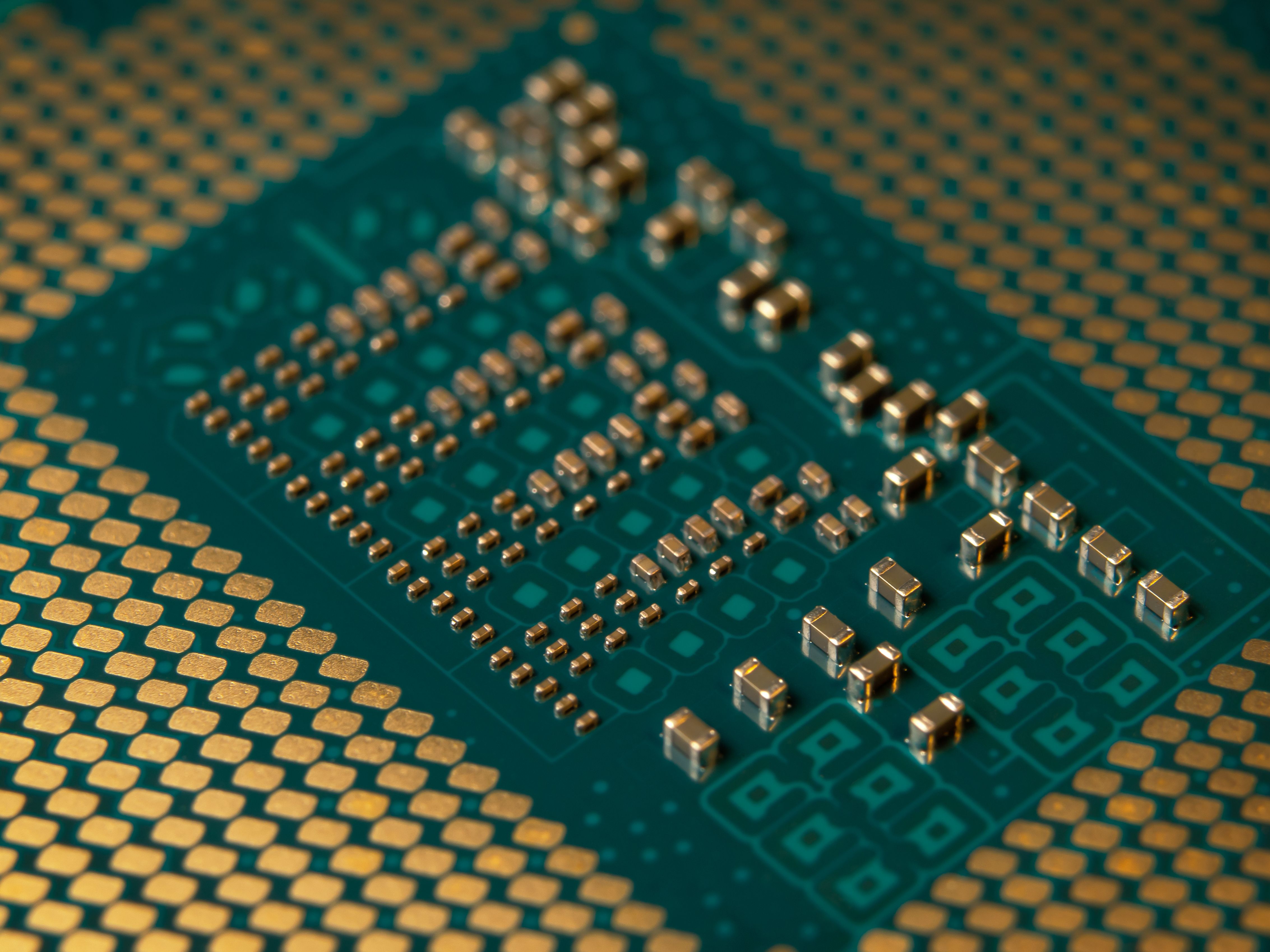
A global shortage of the capacitors that regulate power in AI servers has stretched delivery times for high-end parts to as long as ten months, with Samsung Electro-Mechanics and Japan’s Murata Manufacturing — the two dominant suppliers — both running near full capacity through 2027, according to reports and company disclosures.
The tightness is now lifting a second tier of the market: Chinese capacitor makers Chaozhou Three-Circle and Guangdong Fenghua Advanced Technology have seen profits and share prices surge this year as AI-linked orders spill into their lower-end product lines.
Industry people call the multilayer ceramic capacitor “the rice of electronics” — cheap, invisible, and everywhere, until there isn’t enough of it. That’s the wrong comfort. Rice shortages ration what already exists; this one is rationing what doesn’t exist yet, because Goldman Sachs is calling this the “largest and longest” Multi-Layer Ceramic Capacitor (MLCC) cycle on record and every kitchen in the supply chain is trying to build a bigger pot mid-famine.
Distributor inventory sits 27% below its 2022 peak. Lead times for the high-capacitance parts AI servers actually need have stretched past the 40-week mark for some Samsung Electro-Mechanics products. And TrendForce reports Murata, Samsung Electro-Mechanics, and Taiyo Yuden just posted their highest combined monthly shipments in five years; while still falling short.
Incumbents Bet the Factory
Samsung Electro-Mechanics is expanding a single plant in Busan by up to 20% a year. That’s a factory decision — ordinary, containable.
The company is also fast-tracking an entirely new plant in Calamba, Philippines, 15 months from negotiation to near-operation, purpose-built for the 1005-case, 47-microfarad “AI MLCC” that Nvidia expects to install 800,000-to-1-million-strong in its Vera Rubin and Feynman accelerators. That’s not a factory decision anymore. That’s a bet on which chips exist in 2027.
Capital expenditure is projected to double, from 3 trillion won this year to 6 trillion won next, funded in part by advance payments from roughly ten hyperscaler long-term agreements. Samsung Electro-Mechanics has inverted its own business model, building capacity after the order rather than before it, because customers are, in an official’s words, “asking how much do you want to sell MLCCs for.” Murata’s board just raised its full-year operating-profit forecast 13% to a record ¥430 billion on the same demand.
This is no longer a story about a component. It’s a story about who gets to allocate scarcity; and for now, that’s still Tokyo and Suwon.
China’s Two-Front Response
Two structurally distinct openings are pulling Chinese capital toward the same shortage. First, upstream and mid-tier MLCC makers (Chaozhou Three-Circle and Guangdong Fenghua chief among them) are catching demand Japanese and Korean incumbents can’t fill as those incumbents chase higher-margin AI-server parts.
CCTC’s revenue rose 55% to 6.4 billion yuan in the first half of 2026; Fenghua’s shares hit their daily trading limit twice in one week, part of a 180%-plus year-to-date rally. Both are raising capital in Hong Kong to fund the climb toward higher-end production, though Chinese producers still lag Murata and Samsung Electro-Mechanics on the thinnest, highest-layer-count dielectrics AI servers demand.
Second, and separately, China’s outsourced chip-packaging firms (JCET, Tongfu Microelectronics, Huatian Technology) are riding the same AI wave one manufacturing step downstream, where the capacitors eventually get assembled onto finished silicon.
JCET posted 79% profit growth and committed 7.8 billion yuan to a new Shanghai facility; combined, China’s three largest packagers have announced more than 15 billion yuan in expansion this year, part of a nationwide wave nearing RMB 40 billion across roughly ten major projects, per TrendForce. This is a different market from the MLCC shortage; but the same capex logic, and the same capital markets underwriting both bets simultaneously.
Aklatan’s news and analysis drills down to the structural mechanics, geopolitical shifts, and hidden constraints truly driving AI and Asian tech ecosystems and knowledge work.
See coverage span here: Aklatan’s News and Analysis
Generative AI Transparency:
This article was written primarily with generative AI, specifically SupraGraphos’ A.C.E. News Module. Reviewed with human post-editing, all sources and claims are confirmed as of the time of writing.