
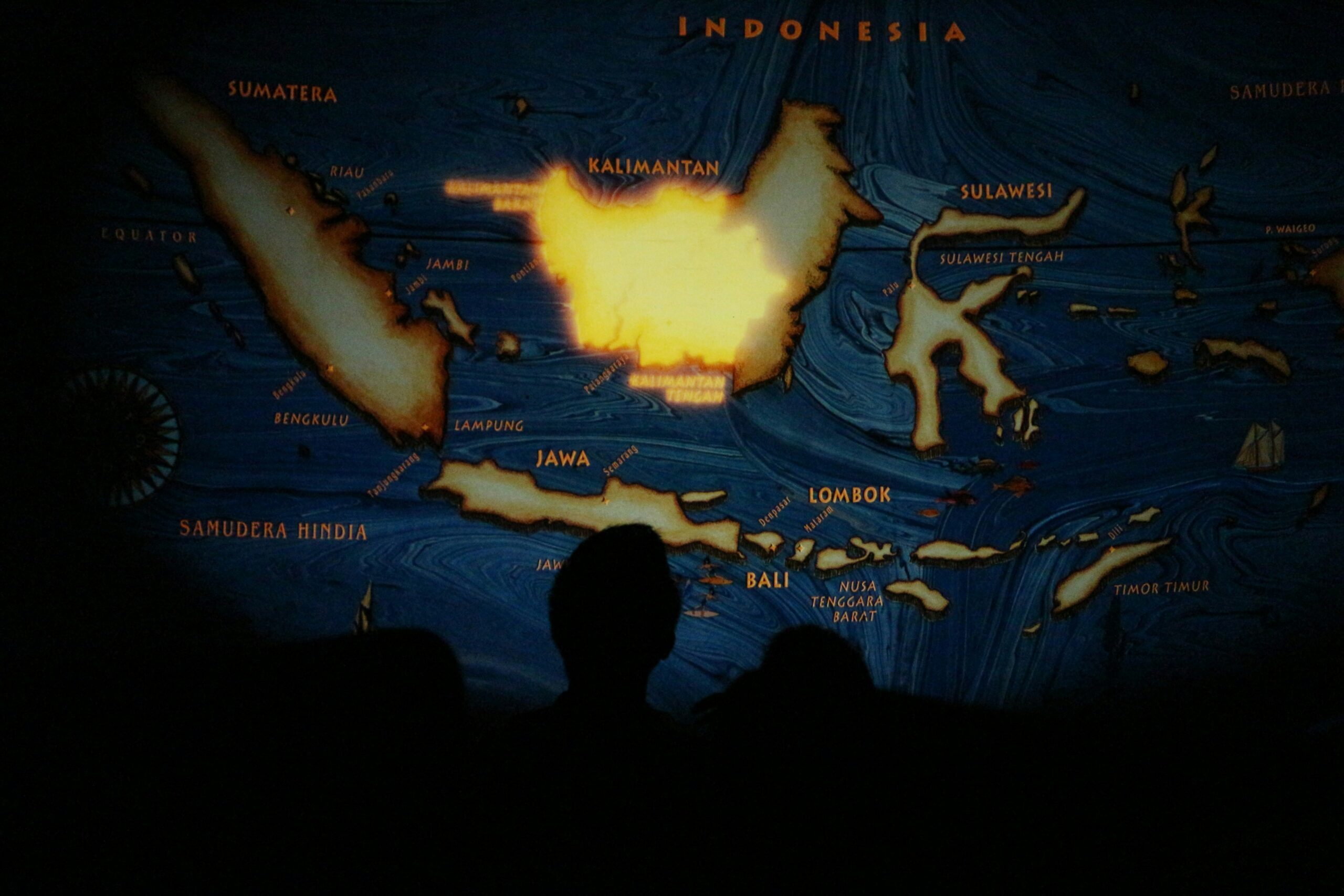
AI cloud company CoreWeave will build three data centers in Indonesia, marking its first Asia-Pacific expansion, it said Tuesday.
CoreWeave, based in Livingston, New Jersey, will add 360 megawatts of contracted power across the three Indonesian facilities, which it will own and operate directly while hiring a local team to run them, according to the company. The move lands in a market already surging: Indonesia’s data-center capacity is on track for a 270% jump in planned capacity, part of a broader scramble by cloud providers to plant AI infrastructure closer to users and data across Southeast Asia, per Tech in Asia.
Rules require electronic system operators to register before serving Indonesian users. Some sectors face stricter localization mandates. Power itself is uneven: Java-Bali holds roughly 65% of the country’s installed grid capacity, and reliability thins out past those hubs. Constraints, not just demand, will decide where CoreWeave’s compute actually lands.
The Indonesia sites add to CoreWeave’s global footprint of 49 data centers as of March. In May, the company raised the lower end of its 2026 capital spending forecast to a range of $31 billion to $35 billion, and it has struck several multibillion-dollar cloud deals this year — including an expanded $21 billion agreement with Meta and a multi-year partnership with Anthropic, per Reuters.
The Gate Before the Grid
Think of Indonesia’s data-center boom less as a market opening and more as a border checkpoint that also happens to sell electricity. Everyone gets waved toward the counter. Not everyone gets stamped through.
CoreWeave’s 360MW bet isn’t landing in open field. It’s landing behind two gates the company’s own announcement signals but doesn’t unpack; and both gates already have a queue.
The first is the registration gate. Any foreign electronic system operator serving Indonesian users has to register as a PSE (Penyelenggara Sistem Elektronik) through Kominfo’s OSS-RBA portal.
A foreign operator can do this without standing up a local legal entity, although the registration framework requires an Indonesian point of contact/representative (Emerhub; LegalIndonesia). It isn’t a formality. It’s a checkpoint with teeth. Kominfo has blocked non-compliant platforms before, and enforcement has only tightened since (Global Advisory Experts).
The second gate seems to be the one that actually decides where the compute lands, not just whether it’s allowed to. Power.
In most data-center markets, capital and land are the bottleneck and power is assumed. Indonesia appears to run that backwards. Capital is abundant: hyperscalers are throwing tens of billions at the region. Land is a solvable problem. Power isn’t, because the scarcity sits in transmission infrastructure that takes years to build, not months to fund (Global Data Center Hub). Java-Bali holds roughly 65.29% of the country’s installed grid capacity (Mordor Intelligence, citing PLN data) — a number CoreWeave’s own release already gestures at, just without the decimal.
Which is why the comparison class matters more than the headline number. CoreWeave isn’t the first operator through this gate.
BDx Data Centers secured 1.2GW of contracted power across three Java campuses through a direct partnership with PLN, including 788 MVA for a single AI campus in Jatiluhur, West Java, in what’s being called the largest power commitment any data-center operator has secured in the country (BDx press release).
One outlet’s read of that deal (worth flagging as interpretation, not PLN’s own statement) is that PLN is now selecting which operators get priority grid access rather than distributing capacity broadly, consolidating allocation around a small number of anchor partners (Global Data Center Hub). PLN has a stated 2,970 MVA data-center target for 2027. If that read holds, CoreWeave isn’t just negotiating a power contract. It’s applying for a seat at a table that’s already filling up.
Even and especially because the grid itself isn’t quiet right now. Java and Bali saw rolling blackouts serious enough that the energy ministry publicly ordered PLN to secure primary energy supply and accelerate generator maintenance (Antara News), and PLN needed emergency coal shipments, 1.8 million tons in July, then 3 million tons a month through December, just to restore about 5GW of reserve capacity and end the rolling outages (Asia Times). That’s the reliability picture CoreWeave’s 2028 launch date may very well be quietly betting will have resolved itself.
None of which says the bet is wrong. It says the bet has a shape — registration first, power second, reliability underneath both — and that shape is legible now, in the deals and disruptions of operators who walked through the same gate months ahead of CoreWeave.
Aklatan’s news and analysis drills down to the structural mechanics, geopolitical shifts, and hidden constraints truly driving AI and Asian tech ecosystems and knowledge work.
See coverage span here: Aklatan’s News and Analysis
Generative AI Transparency:
This news article was written primarily with generative AI, specifically SupraGraphos’ A.C.E. News Module. Reviewed with human post-editing, all sources and claims are confirmed as of the time of writing.