// pub
TechSpheres
-

What Cold War Hotlines Suggest About the Proposed US–China AI Incident Line
The AI incident line the US proposed to China on Sunday has Cold War precedents, and a 2024 Lawfare article had already urged one. By their stated aims, those precedents were meant to keep accidents between rivals from becoming wars, not to end the rivalry.
-
Ant Consolidates Alipay for the Agent Economy, Racing Visa, Mastercard and Coinbase to Define How AI Pays
Ant Group has merged its digital payments, Alipay and credit-scoring units into one business group, betting that AI agents will soon initiate a growing share of everyday transactions. That reorganization folds Ant’s most ambitious bet, the open-sourced Agentic Mobile Protocol, into one push: make Alipay’s rails the default route AIagents pay through. It’s the same…
-
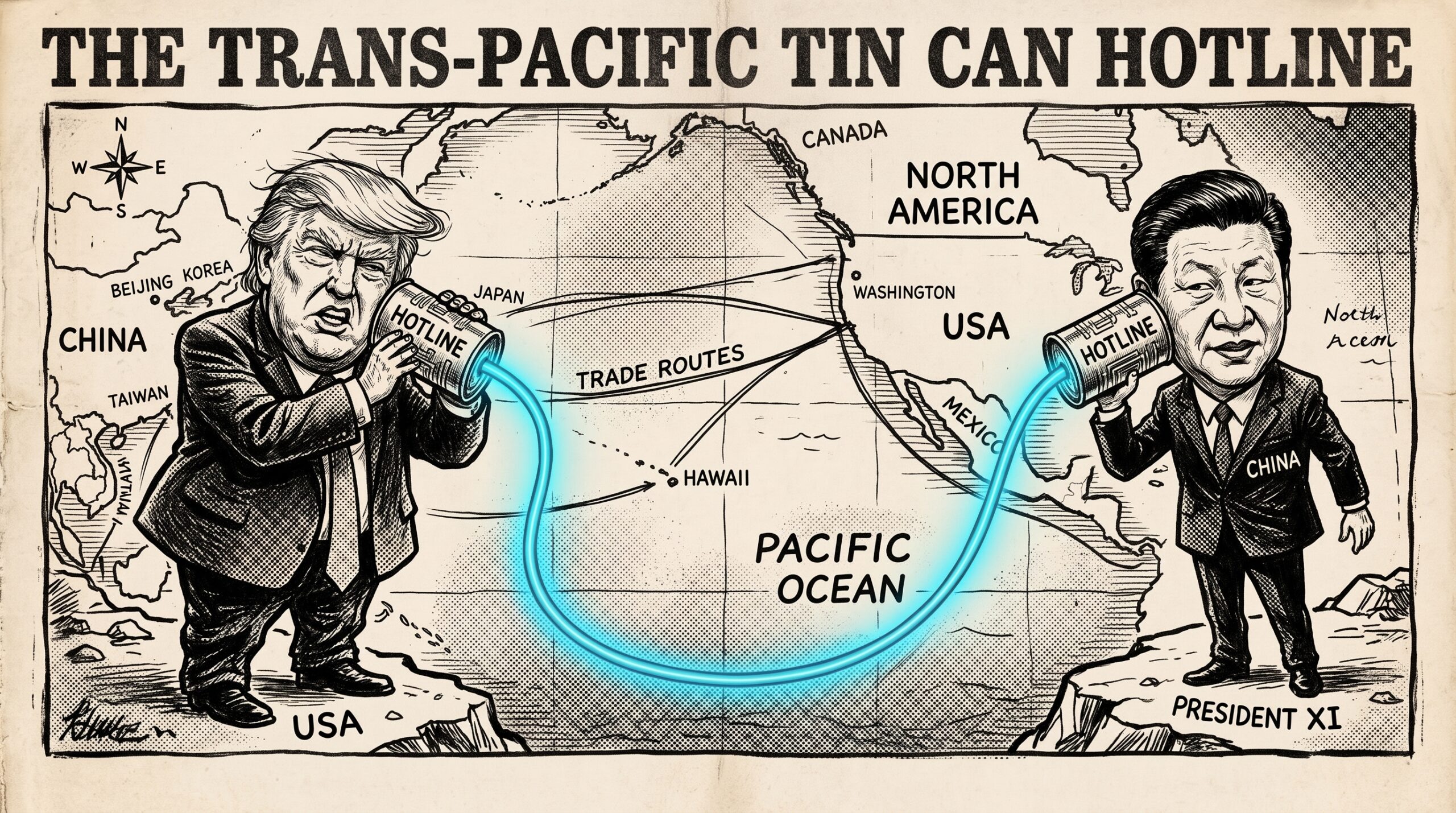
The US–China AI Line: a Smoke Detector, Not a Building Code
The US has proposed a “notification mechanism” with China for artificial intelligence incidents that could affect national security ahead of today’s Trump–Xi summit, Treasury Secretary Scott Bessent said Sunday. The mechanism is essentially an open line between Bessent and Chinese Vice Premier He Lifeng, and Beijing has not publicly agreed, Politico reported, citing four people…
-

Washington is Fighting Over the Wrong AI Rule
MIT’s AI Risk Initiative published Mapping US Federal AI Governance Against Sector Vulnerability, scoring 684 federal AI-specific documents from 2020 through Jan 2026 on sector-by-sector AI risk.
-

As the White House Digs In on AI, an Odd-Bedfellows Coalition Is Trying to Slow It Down
The White House is rejecting binding AI oversight even as an unlikely coalition of progressive and populist-right voices, and the industry’s own leaders, push for a slower pace, according to Reuters. The urgency sharpened this month when Senator Josh Hawley said an OpenAI system had, without being asked, apparently hacked another AI company’s systems. Neither…
-

AI Agentic Payments Get Their Passport Rules, Not Yet Their Customs Union
India’s and China’s payment authorities, alongside Visa, Mastercard and Ant International, have each moved in recent weeks to build systems for identifying and authorizing AI agents that pay on people’s behalf, as far as we can see from the sources we reviewed. None of the three efforts yet says who is liable when an agent…
-
Huawei Claims Its New Kirin Chip Solves the Overheating Problem — But the Verdict Isn’t In
Huawei claims its new Kirin 2026 chip solves the overheating problem plaguing 3D-stacked processors, packing 55% more transistors while cutting power use by up to 66%. Huawei claims its new Kirin 2026 chip solves the overheating problem plaguing 3D-stacked processors, packing 55% more transistors while cutting power use by up to 66%.
-

AI Agents Now Outconsume Humans in Tokens, Fueling a Shift Toward Cheaper Chinese Models
Autonomous AI agents now generate five times more tokens than humans, pushing costs toward cheap Chinese models even as US labs still command most AI revenue. Autonomous AI agents now generate five times more tokens than humans, pushing costs toward cheap Chinese models even as US labs still command most AI revenue. Autonomous AI agents…
-

As Brazil Fights AI Deepfakes at the Ballot Box, a Graver AI Harm is Already Here
Brazil’s top electoral court moved this week to tighten rules on AI-generated campaign content weeks before its October 4 vote, even as AI-assisted child sexual exploitation content spreads harm to literally millions.
-

Tokyo, Suwon, and China’s Multibillion-Dollar Bet on MLCCs
A global shortage of the capacitors that regulate power in AI servers has stretched delivery times for high-end parts to as long as ten months, with Samsung Electro-Mechanics and Japan’s Murata Manufacturing — the two dominant suppliers — both running near full capacity through 2027, according to reports and company disclosures. A global shortage of…