
In this article:
- The current controversy over Moonshot AI and Anthropic isn’t simply an IP theft story—it’s exposing a legal category that hasn’t fully been defined yet.
- U.S. export controls originally focused on AI hardware and model weights. Regulating AI-generated outputs is a fundamentally different problem.
- Model distillation learns from publicly observable outputs rather than proprietary model weights, making it difficult to fit within existing legal frameworks.
- Recent government actions—from the AI Diffusion Rule to the Anthropic blackout and the Kimi K3 accusations—look less like isolated events and more like successive steps in constructing a new regulatory approach.
- Today’s enforcement rhetoric is moving faster than the settled legal doctrine needed to support it.
- More broadly, this case illustrates a recurring structural pattern: institutions often begin speaking and acting as though a category already exists before it has fully formed.
Scott Bessent went on national television in July to accuse a Chinese startup of stealing American AI. Now I had no idea who Bessent was before all this, but the accusation surely caught my eye: it turns out it rests on a category of theft that has no legal home, and impacts export-control minutiae, the discussion of which has become increasingly AI-bounded.
On July 22, 2026, the White House’s Michael Kratsios stood up and said Moonshot AI had covertly distilled Anthropic’s Fable 5 model to build its own Kimi K3 — routing the queries through servers in Thailand to dodge detection1. Bessent followed with the line that’s since been quoted everywhere: open source is not open season on American IP.
Catchy. Entity List designations were threatened. Sanctions were floated2. It read, and was reported, as a straightforward theft story.
Except of course it isn’t.
Two stories wearing one coat
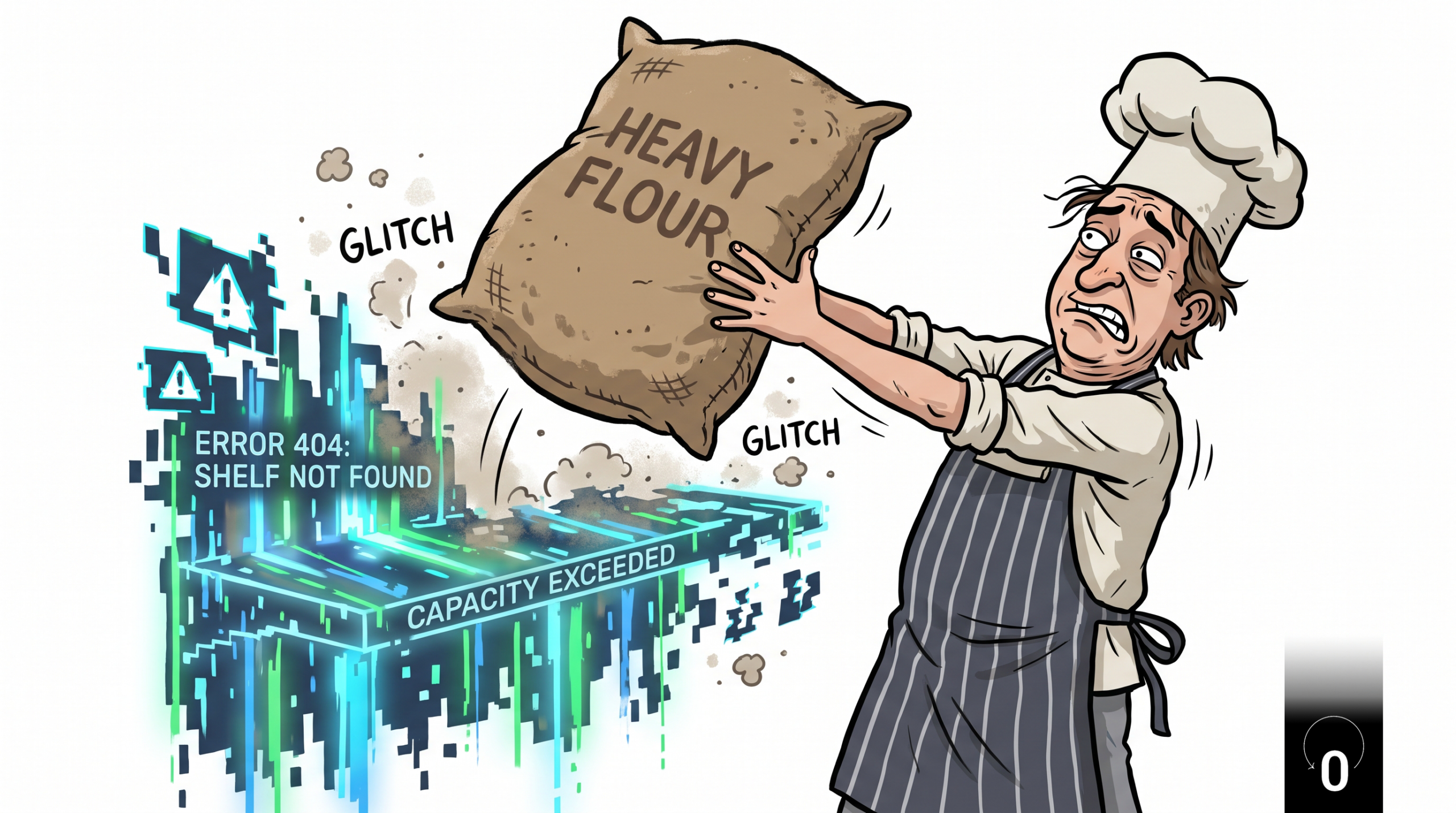
You can sort of think of this affair as the situation of two bakers.
One discovers she can make bread without the flour everyone assumed was mandatory — new grain, a different oven, whatever’s on hand. The other breadwizard, watching his flour monopoly evaporate, decides the fix is to start regulating the recipe instead.
Baker one is the hardware story. And that’s a sentence I didn’t expect to write, ever.
Chinese labs spent 2024 through mid-2026 proving that export-controlled GPUs weren’t actually load-bearing — DeepSeek’s architecture squeezed frontier performance out of a fraction of the expected compute3, and by June a Huawei-led consortium had done something people assumed only NVIDIA’s ecosystem could do: full post-training of a 1.6-trillion-parameter model on entirely domestic silicon4. China then went further and turned the surplus into a product — “token factories” selling AI output the way a utility sells electricity, at 9.9 yuan a month through the same telecoms that bill your phone. Whatever the 2022 export controls were supposed to prevent, this is what happened instead.
Baker two is everything from June 12 onward. And now this metaphor is officially overextended because that barely makes any sense.
From June 12 onward, the Bureau of Industry and Security ordered Anthropic to blackout its new Fable and Mythos models worldwide — for foreign nationals, including Anthropic’s own employees — over an alleged jailbreak report that, per most independent accounts, wasn’t actually novel5. The blackout lifted July 1st for Fable, never fully for Mythos6. Three weeks after that, the Kimi K3 accusation landed.
Most coverage treat these as one continuous escalation: hardware controls failed, so the fight moved up the stack. That’s not it. These are not two chapters of the same book. They’re two bakers responding to the same flour shortage in opposite directions, and they’ve just collided in the same kitchen.
The accusation is reaching for a shelf that isn’t built
There is currently no settled US legal category for treating a model’s outputs — the text it generates through a public API — as controlled, exportable intellectual property.
Weights are controlled. Chips are controlled. Training data, arguably.
But a prompt-output pair, generated by querying a public endpoint the way any paying customer would? That’s the shelf Bessent’s accusation needs, and it doesn’t exist.
You can see the reaching in the seams. The Government Accountability Office ruled in May that BIS’s own attempt to stop enforcing the AI Diffusion Rule was itself an unlawful rule — meaning the underlying framework has been legally binding and functionally dormant at the same time for over a year7. Hugging Face’s Clem Delangue pointed out that Fable 5 had only existed for a few weeks before K3 shipped, which is an odd amount of time to run an “industrial-scale” distillation operation8.
And distillation itself — querying a black box and learning from its outputs — has never required touching a single line of proprietary code or a single model weight9. That’s one of the main reasons why it’s hard to regulate without either breaking open-source AI entirely or inventing a wholly new legal fiction: that generated text is a controlled munition.
Nobody has built that fiction yet. They’re citing it as though it’s already load-bearing.
Why the collision is happening on this exact timeline
Something dormant got woken up. The AI Diffusion Rule sat in the Code of Federal Regulations for a year — legally alive, practically unenforced, ignored by nearly everyone doing business under it. The June 12 blackout is what reactivated the whole apparatus: it’s a small, almost bureaucratic act — an unpublished letter — that happened to sit at exactly the bridge point between a sleeping legal framework and the live news cycle.
Pull that one lever and the GAO ruling, the compliance panic, and eventually the Kimi K3 accusation all wake up in sequence.
What we’re watching, swathed in confident sanctions rhetoric, is a category trying to harden before it’s finished forming. Calcification is usually slow — a rule gets tested, survives challenges, and eventually nobody remembers it was ever contingent. This one is trying to happen in real time, under pressure, with the legal apparatus still visibly under construction around it.
What’s actually at stake
Not who’s right. Not a prediction of how this resolves. The honest position is that nobody currently has settled ground to argue from — not the White House, not Anthropic, whose own head of public policy has publicly backed a legal theory that doesn’t yet exist as law10, not Moonshot, not the open-source critics calling the whole thing protectionism dressed as security policy9.
Whatever eventually fills that gap — a court ruling, new legislation, another round of ad hoc letters — will set the actual boundary of what “AI output” is allowed to be, for years past whichever news cycle carried this story. That’s worth watching closely, not because we know where it lands, but because right now, nobody does.
The reason this is worth naming carefully, rather than filing under “US-China tensions, continued,” is that the shape of the mistake isn’t unique to this dispute.
It’s a match for a failure mode we’d already catalogued elsewhere: fast-moving language treated as though it were the slow, settled thing it’s actually racing to become — a currency of confidence spent as if it were already backed. The tell is the same every time: enforcement language moving faster than the enforceable thing actually exists.
This “shaped insight” is one of several we’ve been seeing recur across various domains in varying degrees. But this pattern was a candidate for something new when we first pulled the thread. It read like a fresh structural type — timely, distinct, worth naming on its own.
It isn’t.
Run properly against our existing taxonomy, it collapses into a pattern we’d already confirmed elsewhere, in an unrelated domain, months earlier. We maintain a working taxonomy of thirteen recurring structural failure modes: seven that show up as specific, local misalignments and design failures, six that operate at a higher order — systemic, cross-scale, field-wide. New candidates get tested against all thirteen before they’re allowed to stand as something new.
Most don’t survive the test, and that’s by design: a pattern-recognition system that never rules its own hunches out isn’t actually finding patterns, it’s just naming coincidences with confidence. What you’re reading is what it looks like when that discipline runs correctly — including on itself, in front of you, on a story timely enough that it would have been easy to skip the check.
Even and especially at the highest levels of statecraft, this all reads like a performative zwischenzug—a desperate, in-between move designed to mask that they’ve lost the tempo. The enforceable law isn’t there; only the bluff is.
FAQs
US law has developed relatively clear legal categories for model weights, hardware, copyrighted works, and some training inputs. What remains unsettled is whether prompt-output pairs generated through public AI interfaces constitute a protected category of intellectual property. The dispute explored here attempts to enforce a category that is still taking shape.
Model distillation generally learns from a model’s observable behavior rather than from its internal weights or source code. Because the process relies on publicly accessible outputs, it raises unresolved questions about intellectual property, export controls, and what legally constitutes a model’s protected assets.
The controversy reflects a shift in what policymakers are attempting to regulate.
Earlier export controls primarily focused on restricting access to advanced compute and hardware. The newer dispute concerns whether knowledge transferred through model outputs can itself become an object of legal control. Although the two debates are related, they address fundamentally different policy problems.
The dispute reinforces a recurring structural pattern in which enforcement language advances faster than the legal and institutional categories needed to support it. Rather than introducing a new failure mode, it demonstrates how regulatory intent can outpace the legal frameworks available to implement it.
The phrase refers to a legal category that policymakers increasingly behave as though it already exists, even though it has not yet been clearly established in statute or case law. The article argues that current disputes are, in part, attempts to enforce the boundaries of that still-emerging category.
Model weights are the internal parameters that define how an AI model behaves and have long been treated as proprietary technical assets. Model outputs, by contrast, are generated in response to user prompts and occupy a far less settled legal position. Much of the current debate centers on whether outputs should receive protections comparable to the systems that produce them.
As AI systems become more capable, prompts and outputs are increasingly viewed not simply as transient interactions but as potential vehicles for transferring knowledge. Whether those exchanges should be treated as protected intellectual property remains an open legal question.
The distinction reflects a broader policy transition.
Restricting access to advanced chips attempts to limit computational capability. Restricting what can be learned from publicly accessible model outputs attempts to limit the transfer of knowledge itself. These represent different enforcement strategies and raise different legal questions.
Not exclusively.
The issues discussed intersect copyright, trade secrets, export controls, contract law, and emerging AI regulation. One of the central observations is that existing legal frameworks do not map neatly onto the kinds of artifacts modern AI systems produce.
The controversy is less about a single AI model than about the emergence of a new legal category. The underlying question is whether AI-generated outputs will eventually be treated as protected assets in their own right, or whether existing legal frameworks will continue to distinguish them from the models that generate them.
Sources
Generative AI Disclaimer:
This article was written with the assistance of generative AI, and reviewed with full human post-editing. It uses the proprietary frameworks of SupraGraphos and went through reviews with the bylined author. Generative AI was used to speed up research and synthesis.
- Times of India, “US government accuses Kimi K3 AI model maker Moonshot AI of stealing Anthropic’s Fable model”, July 2026.
- Times of India, “Scott Bessent warns Chinese companies of Entity List designations”, July 2026.
- IntuitionLabs, “DeepSeek Inference Cost Explained”.
- Tom’s Hardware, “Huawei-led team claims it post-trained DeepSeek’s 1.6-trillion-parameter models on Ascend 910C chips”.
- techpolicy.press, “Did the US Government Just Set an AI Export Precedent by Blocking Mythos?”.
- The Guardian, “Anthropic Fable, Mythos AI models: US export controls lifted”, July 1, 2026.
- U.S. Government Accountability Office, Decision B-337935; see also Pillsbury Law, “GAO: Commerce’s Non-Enforcement of the AI Diffusion Rule Violated the Congressional Review Act”.
- Lawfare, “Responding to AI Distillation Without Panic”.
- Truth on the Market, “Open Models, Closed Minds: AI Policy Keeps Regulating the Wrong Thing”, July 23, 2026.
- CSIS, “Department of Commerce Restricted Access to Anthropic’s Latest Models — What Comes Next?”; see also Spencer Fane, “Ceasefire, Not Peace Treaty: What the Lutnick Letter Means for AI Policy”.