
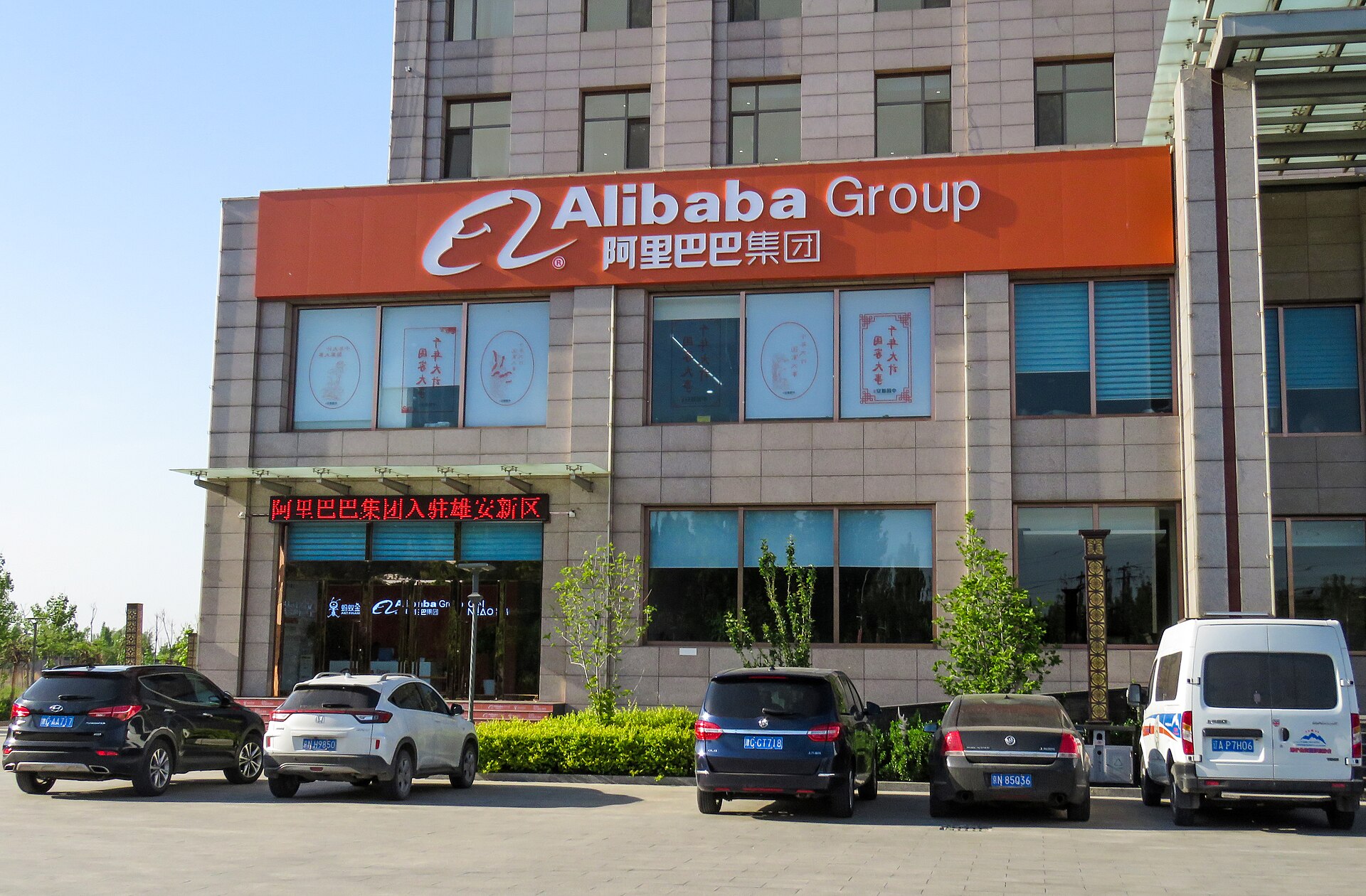
Ant Group has merged its digital payments, Alipay and credit-scoring units into one business group, betting that AI agents will soon initiate a growing share of everyday transactions. That reorganization folds Ant’s most ambitious bet, the open-sourced Agentic Mobile Protocol, into one push: make Alipay’s rails the default route AI
agents pay through. It’s the same wager Visa, Mastercard, Google, and Coinbase are each placing, in a market where no protocol has yet dominated.
The Reorg is the Smaller Story
The merger memo here reads like plumbing. Three business groups, one new one, a new president, an internal letter seen by the South China Morning Post — nothing here should move markets.
Except this particular pipe is being re-laid to carry a currency that doesn’t exist yet: authorization. Ant Group, the Chinese fintech affiliate of Alibaba Group Holding, is folding its Digital Payment Business Group, Alipay Business Group and Zhima Credit Business Group into a single unit under new president Wu Minzhi, a two-decade Alibaba veteran, according to an internal letter from CEO Cyril Han Xinyi.
The stated goal, in Han’s own words, is a bet that agentic commerce is entering a phase of explosive, large-scale growth.
“As AI technology advances and industry adoption accelerates, agentic commerce is entering a phase of explosive, large-scale growth.”
— Cyril Han Xinyi, CEO, Ant Group
That’s the third reshuffle of Alipay’s business lines since late 2024, and it lands on top of a busy 2026: the June launch of Ah Bao, an in-app conversational agent that lets users book everything from ride-hailing to EV charging by talking to a bot rather than tapping through screens, and an August rollout letting merchants convert ordinary web storefronts into “agent-ready skills” that outside AI agents can transact against directly, per Alipay’s own announcement.
Ah Bao itself launched with an explicit competitive frame: it was built, per reporting on the launch, to pit Alipay’s user base against Tencent and ByteDance’s own agent pushes. The reorg is the paperwork. Ah Bao and the merchant platform are the product. What comes next is the part that actually reaches outside China.
The Ongoing Standards War
Let’s start the frame small: one company built one protocol. Ant International, the overseas affiliate Ant Group spun off in 2024, launched the Agentic Mobile Protocol (AMP) in April 2026 and open-sourced it on GitHub in September, positioning it as plumbing for AI agents to pay through digital wallets rather than cards, according to the company’s own release.
Widen the frame: it’s not one company, it’s ten wallets and seven acquirers, Adyen, Checkout.com, Fiserv, Global Payments, Nuvei and Worldline among them, signing on to Alipay+, Ant International’s cross-border network connecting more than 150 million merchants to over 2 billion consumer accounts globally.
Widen it again, and the frame extends beyond companies. It refocuses onto which kind of infrastructure wins: card rails or wallet rails, open protocols or proprietary ones, identity frameworks built for humans or ones built for software that acts on a human’s behalf.
OpenAI and Stripe have their own checkout handshake.
Google built AP2 and handed it to the FIDO Alliance.
Mastercard contributed Verifiable Intent to the same body.
Coinbase leads a stablecoin-native rival, x402, with Visa, Mastercard, Google, Amazon and Microsoft all sitting as founding members alongside Ant International, per reporting on that launch.
Visa has its own Trusted Agent Protocol, positioned in the company’s 2026 outlook as the trust layer for agentic commerce broadly.
That’s not three companies competing for share of one market anymore. It’s a contest over what “money” means once the party spending it isn’t a person.
“Agentic commerce is a channel expansion… to date it’s been largely card-based.””Agentic commerce is a channel expansion… to date it’s been largely card-based.”
— Brian Sze, General Manager, Asia Pacific, Checkout.com, on AMP’s push into wallet rails
The Trust Gap
Ant’s own announcement lists ten Alipay+ wallets as Phase I partners for AMP: Alipay, AlipayHK, DANA, GCash, KakaoPay, MPay, TNG eWallet, TrueMoney, Toss and Starryblu, together said to serve 1.5 billion accounts. A closer reading of the announcement, as one outlet’s analysis notes, finds that what these ten wallets actually agreed to is narrower: support for AMP within their own existing agent-security architecture, not a commitment to run agentic checkout. TNG Digital’s chief executive described the company as still “exploring how this technology could support more convenient experiences” within its wallet.
“Exploring how this technology could support more convenient experiences.”
— Alan Ni, CEO, TNG Digital, on TNG eWallet’s participation in AMP
The same pattern recurs in AgentSafePay, the money-back mechanism Ant attaches to AMP transactions. Ant’s April launch release described it as coverage for payment partners in cases of account takeover. Its September feature list describes it as a guarantee for merchants against agent-specific risks. Its September backgrounder describes it as protection framed around users avoiding transaction risk.
Three documents, three different answers to the question of who is actually indemnified when an agent gets a transaction wrong. The company has not said which one is correct. A cross-network Know-Your-Agent framework with Mastercard and Visa, meanwhile, was announced with no implementation timetable, no pilot volumes and no technical specification attached, according to the same review of the announcement’s language.
None of this makes the underlying bet unsound. It does make the gap between the announcement and the agreement the curious focal point.
What’s Actually Being Decided
South Korea’s KakaoPay, one of the ten Phase I wallets, has already run a working proof of concept in which an AI agent both buys and sells using stablecoins, settling directly with sellers’ business wallets, per the company’s own disclosure.
It’s a small, single-company test. It’s also evidence that the wallets, acquirers and card networks all racing to attach their name to the next payment standard are simultaneously hedging into a fourth, stablecoin-native one, through the same Linux Foundation body that counts Visa, Mastercard and Google as founding members alongside Coinbase.
That’s the substrate feeding the reorg memo story: not one company’s confidence that it has built the winning rail, but every major payments incumbent’s admission, through the sheer number of camps it’s joined at once, that it’s too early to tell which one will win.
Ant Group’s earnings for the quarter ending June 30 rose just 1% year-on-year, Reuters calculated from Alibaba’s filings, even as the company disclosed $5.17 billion in AI research spending for 2025 alone. The reorg isn’t a company that has solved agentic commerce announcing its solution. It’s a company spending heavily on the bet it’s chosen, restructured to look like conviction rather than a gamble.
Whether it is either will be visible only once one of these wallets stops saying it’s exploring and starts saying it’s live.
Aklatan’s news and analysis drills down to the structural mechanics, geopolitical shifts, and hidden constraints truly driving AI and Asian tech ecosystems and knowledge work.
See coverage span here: Aklatan’s News and Analysis
Generative AI Transparency:
This article was written primarily with generative AI, specifically SupraGraphos’ A.C.E. News Module. Reviewed with human post-editing, all sources and claims are confirmed as of the time of writing.